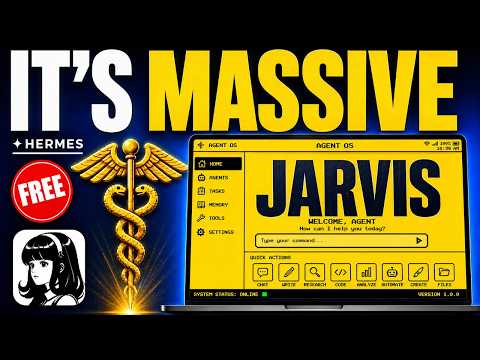
What OpenClaw + Hermes AI SEO Is
OpenClaw + Hermes AI SEO is a free, open-source system of AI agents that does SEO for you. It handles keyword research, writes content, optimizes posts, and publishes them—all automatically. You don't need a team, a writer, or coding skills.
The system is built on Hermes Agent, a tool with over 133,000 GitHub users and ranked #2 on OpenRouter. It's a full agent OS, not just one bot. You can install it in one click, and as it runs, it gets better at SEO for your site.
Main Features of the Agent OS
This system has several powerful features. It includes agents for keyword research, content writing, optimization, publishing, internal linking, link building, competitor analysis, and technical SEO. All agents run at the same time.
- Keyword research agent creates files with keywords, difficulty, and priority.
- Content writer plans the whole site: pillars, clusters, topic maps, URL structure, and internal links.
- Publisher connects to WordPress and posts on a schedule.
- Swarm mode runs 12 or even 17 agents together for a full website build.
- Goal system with an AI judge keeps working until the job is done.
- Link planner finds directories, forums, and PR spots and writes outreach emails.
How to Set Up OpenClaw + Hermes AI SEO
Setting up this system is simple, even if you're not technical. Follow these steps to get it running on your machine.
- Get the ready-to-install zip file from the AI Profit Boardroom (link in the video description).
- Drop the file into your system and install it—no coding needed.
- Connect your WordPress login and API key. An API key is a special password that lets tools talk to each other.
- Set a daily schedule task. For example, type: "post one new SEO blog every morning at 5 a.m."
- Optionally, connect OMI and Obsidian to give the agents your personal context for writing.
Once installed, the agents start working immediately. You can watch them on the dashboard.
Using the Agent for Keyword Research and Content
To do keyword research, you just say something like "Go do keyword research for me as a deep dive." The agent creates two files: a keyword deep dive and a keyword cluster file. It writes them in a clean table with keyword, difficulty, and priority. This used to take a junior SEO a whole week; Hermes does it in about 5 minutes.
For finding keyword opportunities, go to Google Search Console, look at the last 7 days, and sort by impressions. The keywords with the most impressions are the ones you already have a shot at. If you don't have Search Console, look at competitors using RFs. Low competition keywords are easier to rank for, and trending keywords usually have less competition and more reach.
In the episode, Julian gives an example: ask the agent to find 90 long-tail keywords with low competition and high search intent for AI automation. The agent builds the whole list automatically.
For content, you give the agent your context and a real case study. For example: "Write an SEO article about AI automation for small business." Include context on the AI Profit Boardroom and a case study of a member who automated content. The agent writes the post with internal links and hooks at the top.
How the Swarm and Goal System Work
The swarm is a team of AI agents working at the same time. Instead of one robot, you get 12 (or more) robots on one mission. One does keyword research, one writes, one does internal linking, one plans link building, one does competitor analysis, and one handles technical SEO. They all run in the background, and they never sleep or quit.
In the episode, a single foundation agent builds a competitor gap analysis, plans keyword strategy, finds featured snippets, and drafts a full technical SEO plan. That's a whole strategist's monthly output from one agent.
Julian also shows how he used 17 agents together to build a full 50-page website. The system planned the whole thing and deployed it live to Netlify with one prompt. Netlify is just a hosting service. The goal system allows you to set a goal like "build out a website and rank it," and the AI judge keeps the agents working autonomously until it's done. No managing or checking in.
Results Shown in the Episode
The episode shows real results. One site grew from 16 clicks a day to 83 clicks a day using the trending keyword strategy. That's steady growth, not a spike.
For link planning, the agent found a list of relevant directories, communities, Discord and Slack groups, forums, Q&A sites, and PR spots in about 2 minutes. Julian notes that a junior SEO would spend a week building that list.
The system also built and deployed a full 50-page website live. So the speed and scale are clear: tasks that used to take a week now take minutes.
Tips, Limits, and Mistakes to Avoid
Here are some tips from Julian. Use Google Search Console to find keywords you already rank for. Look at the last 7 days and sort by impressions. Target low competition or trending keywords to make ranking easier.
Don't skip the case study or context when writing content. The agents need that to write posts that sound like you. If you don't provide it, the content may be generic.
Also, remember that content alone isn't enough. You still need SEO and link building to rank. The system helps with link planning, but you must actually do the outreach.
One limit: the agent OS is free and open source, but you need to provide your WordPress login and API key. Make sure you set the daily schedule correctly, or the posts won't publish.
Who Should Use OpenClaw + Hermes AI SEO
This is for anyone who wants to rank websites without a big team or budget. If you're a small business owner, a blogger, or an agency, you can automate repetitive SEO tasks. Julian notes that a real SEO team might have 10 people, but this agent OS spins up 12 agents in five minutes—and they work for free.
It's especially useful if you want to grow organic traffic. Julian shows how he grew one site from 16 to 83 clicks a day. The system also helps with personal branding, because you can connect OMI and Obsidian to make the content sound like you.
So, if you want to save time and money while building and ranking websites, this system is a practical option.